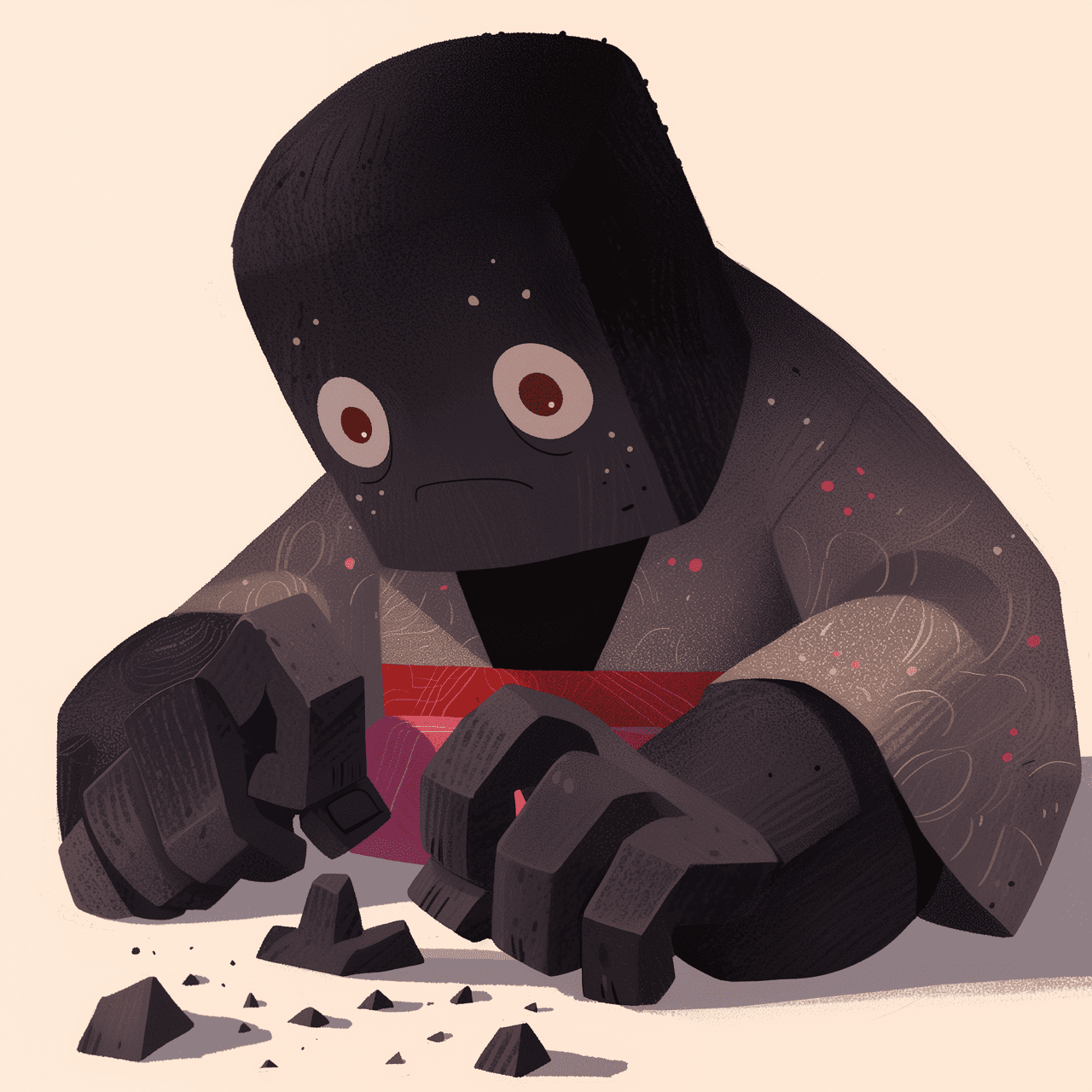
Caregiver
OrderProtector
- Desire
- To protect and support people, and know that you are helping someone
- Fear
- Becoming unnecessary, finding that everything carries on without you
- Gift
- Creating a place where someone who falters will be helped back up
Protector
The Caregiver is one of twelve archetypes organized around ideas from Jung’s archetype theory, centered on protecting and supporting others and fearful of becoming unnecessary. Its gift is making it feel safe for people to make mistakes.
Look around a room, and the person who needs help may be the first one you notice. No one has asked, but by the time you register the need, you are already doing something about it.
You may rarely think of this as kindness. Filling in what someone is missing feels more like what happens naturally.
What the Caregiver finds hardest is discovering that things run perfectly well without them. Being unnecessary can hurt more than going unthanked. So you keep supporting people, even without being asked, even with little left to give.
Many people benefit from that effort. Fewer may think to ask whether you are tired, partly because you do not let it show.
These are not one-to-one matches. Read them as types that point in a similar direction.
You now know your "why": what you seek and what you fear.In 120 Archetypes, the types whose reactions come closest to the Caregiver motive are Guardian and Herbalist.But the same motive shows up differently in each person's actions.30 questions show how your motive actually plays out.Where the two don't line up, your real challenge starts to come into view.
30 questions, about 3 minutes. Free, no signup.
Which archetype are you closest to?
12 questions, about 1 minute. Free, no signup.
Start the free test →This is not a psychological test created by Carl Jung. It is an interpretive profile independently designed by 120 Archetypes, drawing on Jung’s archetype theory and the twelve-category framework organized by Carol S. Pearson and Margaret Mark. It is not intended for clinical diagnosis or scientifically validated measurement.